M
Inspection that looks past the obvious spot
We check likely moisture paths: around plumbing penetrations, under sinks, basement rim joists, HVAC condensate areas, window and door frames, and any wall or ceiling below a known leak.
Serving Overland Park, Kansas & surrounding areas
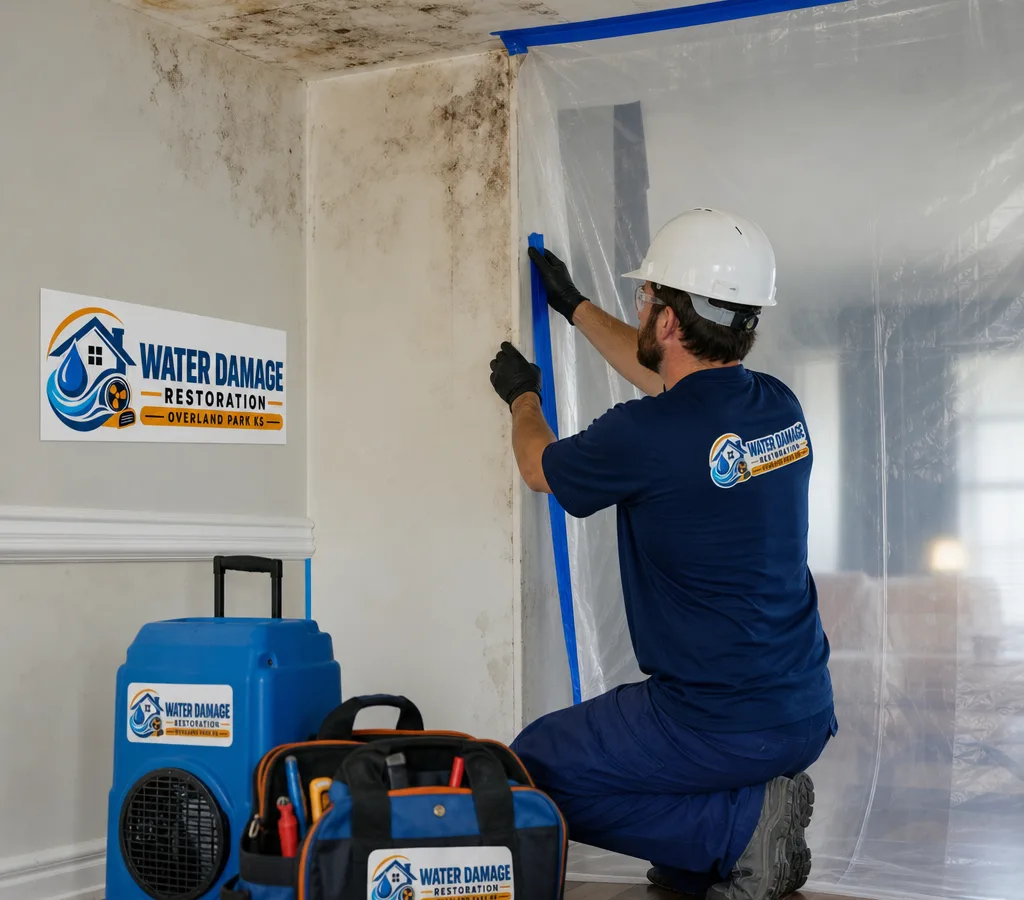
Mold remediation · Overland Park, KS
If you smell a musty odor, see staining, or have had a recent leak, we can inspect, contain the area, remove contaminated materials, and help you get back to clean, dry indoor air with a clear plan you can follow.
Find and control the source
Searching for mold remediation Overland Park KS usually starts with one of three things: a visible patch that keeps coming back, allergy-like symptoms that flare up indoors, or a water event—such as a roof leak, plumbing leak, or wet basement—that never fully dried.
True remediation is a controlled cleanup process. The goal is to stop the spread, remove mold growth and contaminated materials, and correct the moisture conditions that let it grow in the first place. That is why we start with an on-site assessment and end with a documented drying and prevention plan, not a quick spray.
Overland Park homes often include finished basements, tight insulation, and areas with limited airflow such as closets, spaces behind vanities, and attic knee walls. When moisture enters these cavities, mold can grow out of sight. Our team focuses on finding the source, establishing proper containment, and cleaning to a standard that makes sense for occupied spaces.
For clients dealing with water at the same time, our Water Damage Restoration Overland Park KS team can coordinate the drying and remediation steps so the timeline stays realistic and the work does not fight itself.
Controlled, documented cleanup
We check likely moisture paths: around plumbing penetrations, under sinks, basement rim joists, HVAC condensate areas, window and door frames, and any wall or ceiling below a known leak.
We use plastic sheeting, zipper doors, and HEPA-filtered air control when the situation warrants it, so disturbed spores are managed instead of spread through the home.
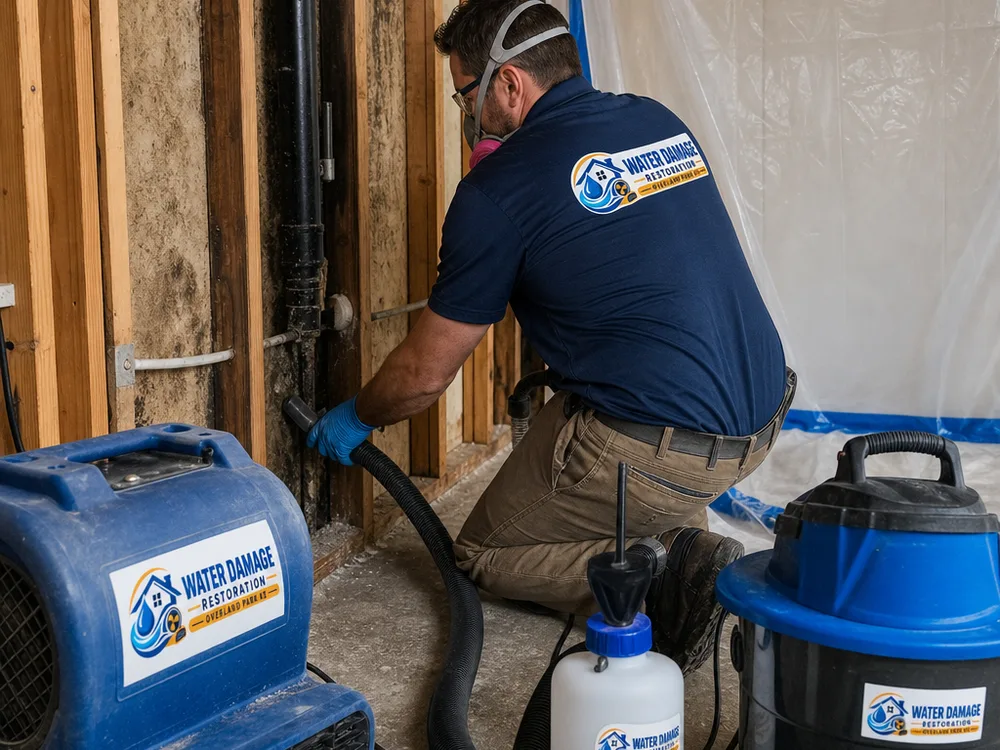
Porous materials that cannot be reliably cleaned may be removed and bagged out. Remaining surfaces are HEPA-vacuumed and wiped using appropriate methods for the substrate.
Remediation only lasts if the moisture is addressed. We identify practical next steps, like targeted drying, sealing air leaks that feed condensation, or correcting a leak path.
You get a written scope describing the affected areas, what is being removed or cleaned, and what conditions must be met before closing everything back up.
We keep work zones controlled, protect floors and traffic paths, and communicate what you can safely use and what should stay off-limits during the project.
Hidden moisture drives repeat growth
In mold remediation Overland Park projects, the visible growth is often the last clue you notice. The root cause is usually moisture that lingers in a hidden or low-airflow area.
Common scenarios we see:
Mold returns when moisture remains or when only the surface is cleaned. Our approach is to isolate the work area, remove or clean affected materials correctly, and verify that the area is dry enough to rebuild or close up. If your situation started as a leak or wet building materials, combining remediation with water damage restoration often shortens the overall downtime and reduces the chance of repeated contamination.
From assessment to restoration
We start by identifying what is wet, what was wet, and what is still at risk. We look for leak paths and check materials that commonly hold moisture like drywall, baseboards, and insulation.
We determine the right level of containment for the affected area. For larger or more active growth, we set barriers and use HEPA-filtered air control to keep the rest of the building protected.
Some materials cannot be reliably cleaned once mold has grown into them. When needed, we remove affected porous materials in a controlled way and dispose of them properly.
We HEPA-vacuum and wipe down remaining framing and substrates using methods appropriate to the material. We focus on physical removal, not masking odors.
We address remaining moisture with targeted drying and airflow control. Before the area is closed back up, we verify that the materials are dry enough for the next phase.
If drywall, trim, flooring, or paint needs to be replaced, we can coordinate the restoration steps so you have one plan for returning the space to normal use.
Practical cost guidance
Mold remediation in Overland Park typically ranges from about $1,500 to $6,000 for many residential jobs, with small, contained areas sometimes closer to $800 to $2,000 and larger multi-room or HVAC-involved projects commonly reaching $6,000 to $15,000+.
Final cost depends on the size and location of the affected area, how much porous material must be removed, containment level, access such as an attic, crawlspace, or area behind cabinets, and whether drying and rebuild work are included. The exact scope and price are confirmed after an on-site inspection and moisture assessment.
Customer experiences
“We had mold behind a finished basement wall after a small leak. The crew contained the area, removed the wet drywall and insulation, and explained what had to dry before we could rebuild. The house never had that musty smell again.”
“They were direct about what could be cleaned and what had to be replaced. The written scope made it easy to understand what was happening and what was next.”
Practical answers
Start time depends on the size of the affected area and whether active moisture is present, but we prioritize situations where mold is spreading or the space is not safely usable. After a quick intake, we schedule an on-site assessment to define containment needs and the work plan before any demolition or cleaning begins.
Many projects can be completed while you stay in the home if the work zone can be isolated and the HVAC is managed appropriately. If mold is widespread, affects bedrooms, or requires extensive containment, it may be safer to stay elsewhere during the most intensive parts of removal and cleaning, and we will tell you that up front based on the inspection.
Sometimes, but only if the affected materials are accessible and salvageable. If drywall, insulation, carpet pad, or particleboard cabinetry are contaminated, removal is often the correct approach because mold can grow into porous materials where wiping cannot reach. We look for the smallest effective opening that still allows proper cleaning and drying.
Mold removal usually refers to cleaning visible growth, while remediation includes containment, removal of contaminated materials when needed, HEPA cleaning, and addressing the moisture source so growth is less likely to return. If the moisture problem is not corrected, even a thorough cleaning can be temporary.
We can advise when testing is useful, but remediation decisions are often driven by visible growth, moisture conditions, and affected materials rather than a single test result. If you need formal sampling for a real estate transaction or a specific documentation requirement, we can coordinate the next step and align the remediation scope to the findings.
Coverage depends on what caused the mold and your specific policy language. Mold tied to a sudden covered water event may be treated differently than long-term seepage or maintenance issues. We document what we find on-site and provide a clear scope so you have the information needed for a claim discussion.
If you are seeing staining, smelling persistent mustiness, or dealing with a recent leak, we can inspect the area, explain what is affected, and provide a written scope for mold remediation in Overland Park so you know what it takes to fix it correctly.