M
Moisture mapping and documentation
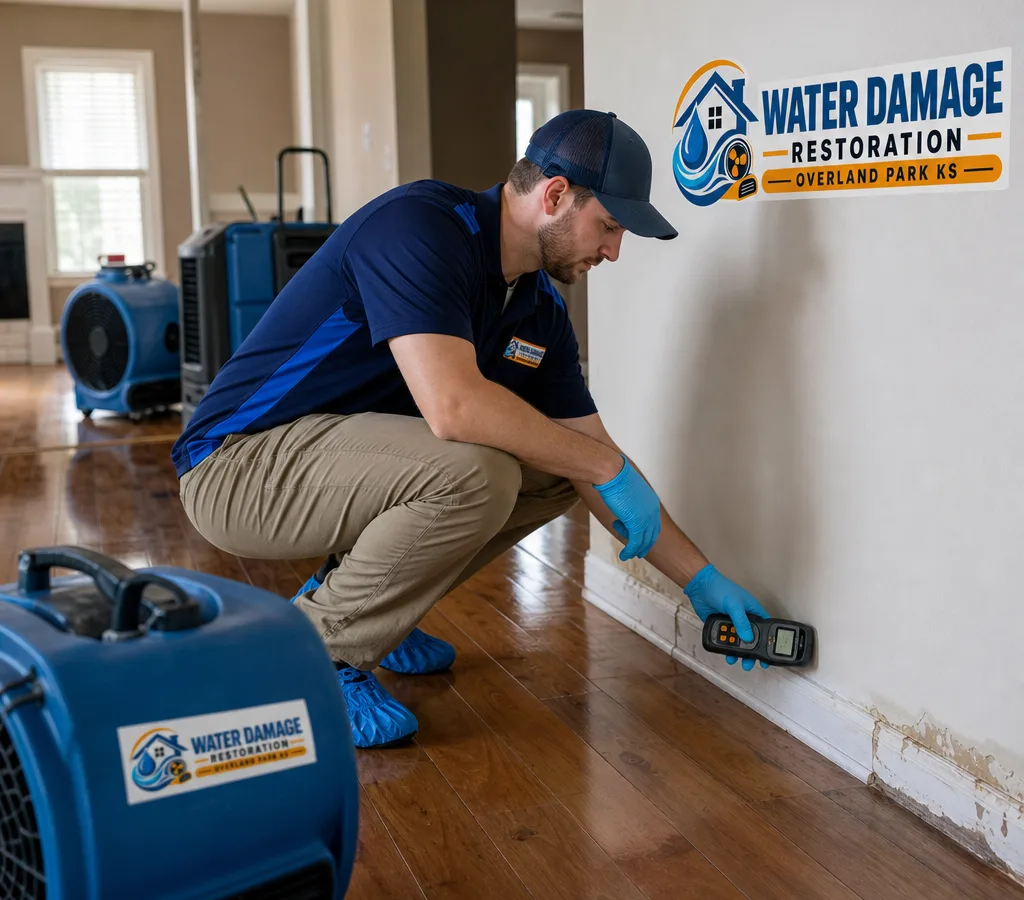
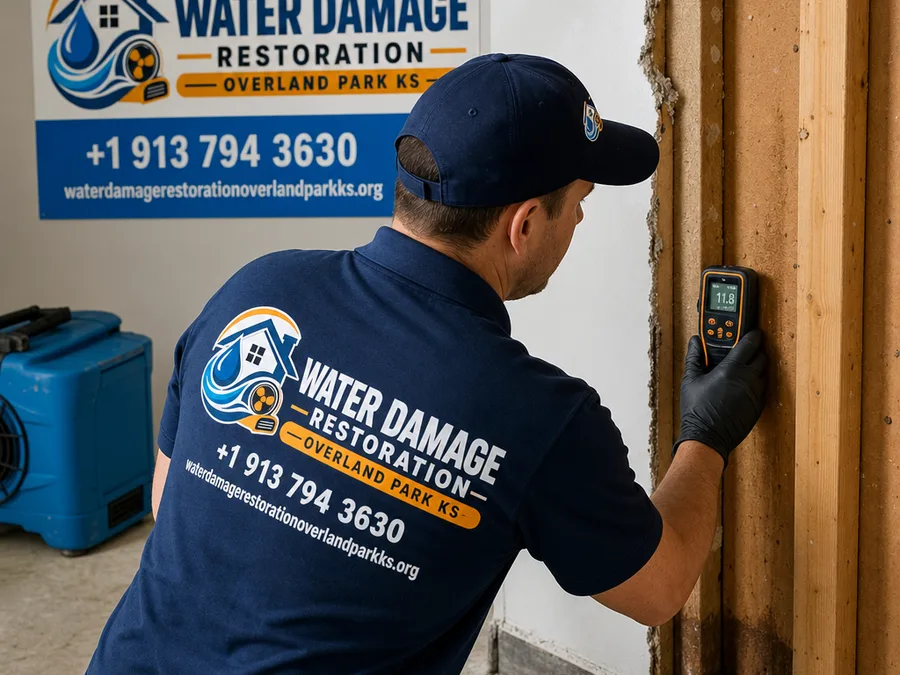
We use non-invasive meters and targeted probe readings to locate wet materials, then map affected areas room by room so the drying plan matches what is actually wet.
Serving Overland Park, Kansas & surrounding areas
Water damage repair · Overland Park, KS
When water gets into floors, drywall, or cabinets, the clock starts. Get a rapid on-site assessment, professional drying, and repair work that protects the structure and helps prevent odor and mold.
Find the full wet footprint
If you are searching for water damage repair overland park ks, you are probably dealing with more than a wet floor. Water can travel under LVP and hardwood, wick up drywall, saturate insulation, and sit in subfloors where it does not dry on its own.
Water Damage Restoration Overland Park KS focuses on the full repair cycle: stopping the source, removing affected materials when needed, drying with commercial equipment, verifying dryness with moisture readings, and rebuilding the damaged finishes. Whether the water came from a supply line, a water heater, an appliance, a backed-up drain, or stormwater intrusion, the goal is the same: dry the structure correctly and repair it so you can use the space again.
Overland Park homes often have finished basements and lower levels, which means a small amount of water can become a big problem fast when it reaches carpet pad, baseboards, and wall cavities. If you are unsure how far the water traveled, an inspection with moisture mapping is the safest first step.
Dry, clean, and restore
We use non-invasive meters and targeted probe readings to locate wet materials, then map affected areas room by room so the drying plan matches what is actually wet.
Standing water is removed first. When materials cannot be dried reliably—such as swollen drywall, saturated pad, or delaminated flooring—we remove only what is necessary to expose the structure for drying.
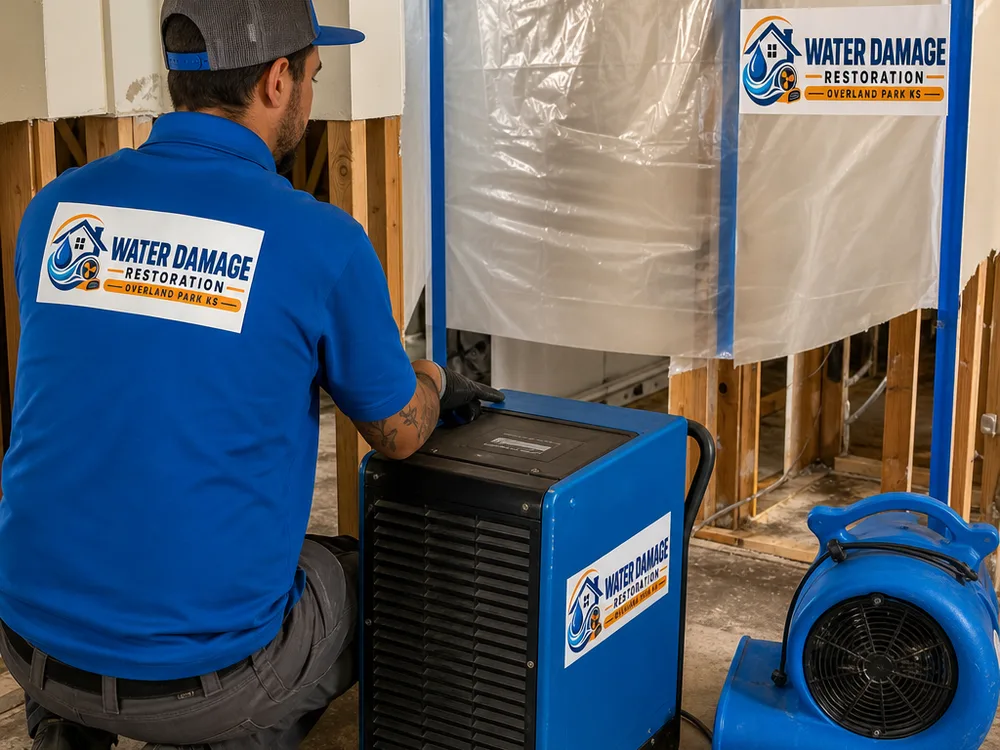
Air movers, dehumidifiers, and containment are set based on material type and moisture load. Drying is verified with follow-up readings, not guesswork.
Surfaces are cleaned and treated as appropriate for the water source. Deodorization steps are planned around what was affected, especially porous materials.
After dry standards are met, we handle repairs such as drywall replacement, texture, paint, baseboards, trim, and flooring transitions so the space is put back together cleanly.
You get a written scope, photos as needed, and straightforward updates on what is drying, what is being removed, and what gets rebuilt.
Measurements guide the drying plan
A surface can feel dry while the structure underneath is still wet. Subfloor layers, framing, insulation, and the backside of drywall can hold moisture that leads to odor, swelling, and microbial growth.
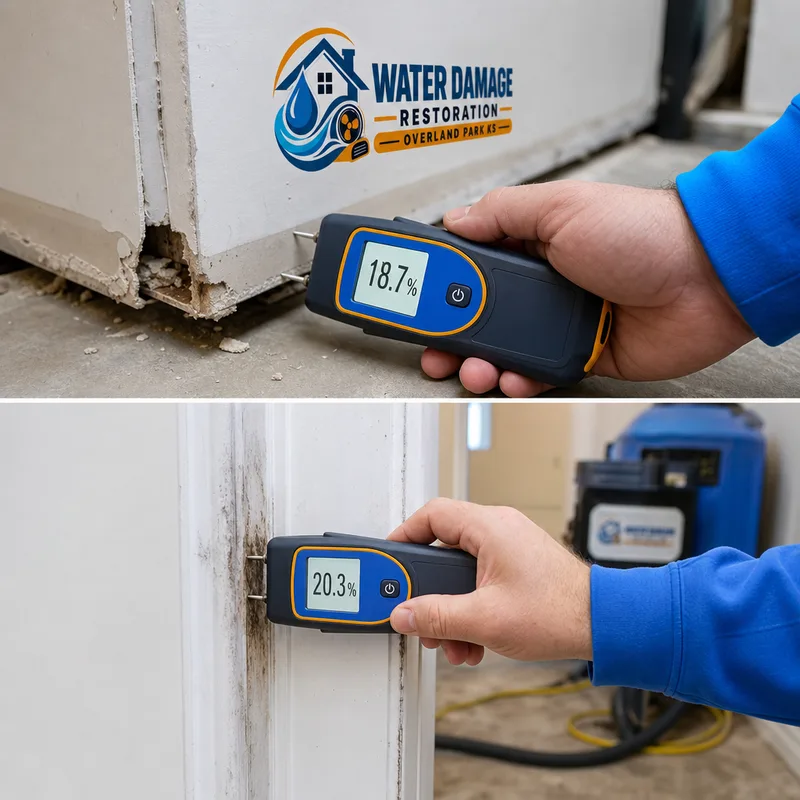
Our approach is measurement-driven. We check moisture content over time, track drying progress, and adjust equipment placement instead of leaving the same setup in place for days without verification.
You will also get guidance on immediate steps that protect the home while help is on the way: shut off the water source if possible, avoid running HVAC if the return is in a wet area, and move valuables away from wet edges. If the water is from a drain backup or unknown source, limit contact and keep people and pets out of the affected area until it is assessed.
For a broader look at how our team works across the metro, Water Damage Restoration outlines our general service approach and what to expect when you reach out.
From first visit to finished repairs
We identify the water source and category, check affected materials—flooring, drywall, cabinets, and insulation—and map the wet footprint so the scope is accurate.
We remove standing water and, when needed, perform controlled demolition to open wet assemblies. The goal is access for drying without tearing out what can be saved.
Airflow and dehumidification are set for the material types present. Containment and negative air may be used to keep dust and humidity controlled.
We return to record moisture readings and equipment performance. If a wall cavity or subfloor is not drying as expected, we change the plan rather than waiting it out.
Cleaning steps depend on whether the water was clean supply water or contaminated. Porous materials are handled differently than hard, non-porous surfaces.
Once dry standards are met, we complete repairs such as drywall, paint, trim, and flooring work so the home is functional and looks right again.
Practical cost guidance
Water damage repair in Overland Park typically ranges from about $900 to $6,500+, depending on how far the water traveled and what materials must be removed and rebuilt. A small, contained leak with limited drying and minor drywall repair often falls near the low end, while basement flooding, multi-room saturation, or cabinet and flooring replacement pushes costs higher.
Price is driven by affected square footage, water category (clean vs contaminated), drying days and equipment load, demolition needs, access to wet cavities, and the amount of rebuild (drywall, paint, trim, flooring). The exact cost is confirmed after an on-site inspection and moisture mapping.
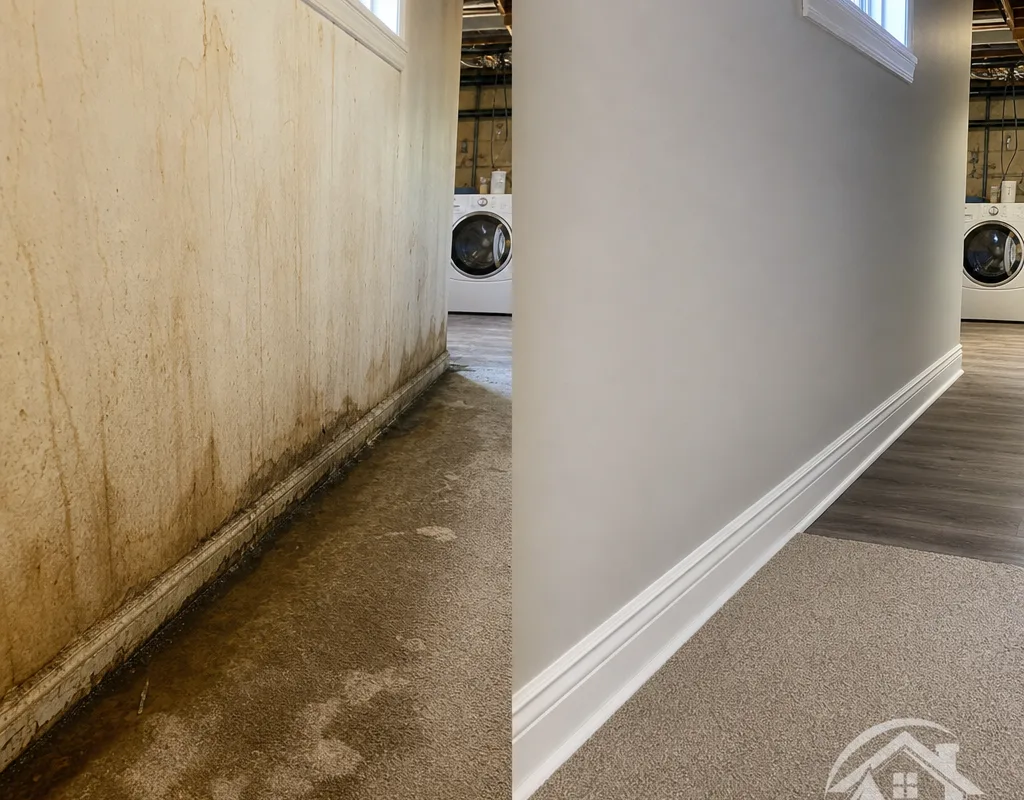
From wet materials to restored rooms
Customer experiences
“We had water spread under our flooring and into the baseboards. The team mapped the moisture, explained what had to come out, and the drying setup was clearly working. The repairs blended in with the rest of the room, which mattered to us.”
“Our basement took on water during a storm. They arrived quickly, extracted the water, and kept checking readings until it was actually dry. The communication was straightforward the whole time.”
Practical answers
You should start mitigation the same day whenever possible because water spreads under floors and into wall cavities quickly. Early extraction and drying reduces how much material has to be removed and lowers the chance of odor and microbial growth, especially in finished basements and carpeted areas.
Sometimes, yes, if moisture readings show the wall cavity and insulation are dry or can be dried effectively without trapping moisture. If the bottom of drywall has wicked water, or insulation is saturated, removing a controlled section is often the safest way to dry framing properly and avoid future staining or odor.
Most drying phases take about 3 to 5 days, but the timeline depends on how much water was absorbed, the materials involved (hardwood, plaster, insulation), and whether water entered cavities or subfloors. We base the timeline on moisture readings taken during monitoring visits, not on a fixed number of days.
Clean water usually comes from a broken supply line or overflowing tub, while contaminated water can come from drain backups or outside intrusion. Contaminated water typically requires more aggressive removal of porous materials and more thorough cleaning steps before repairs begin.
Yes, we can provide photos, moisture documentation, and a written scope that helps support a claim when water damage is covered. Coverage depends on your policy and the cause of loss, so we focus on documenting conditions clearly so you and your adjuster can make decisions with good information.
Stop the source if it is safe, shut off power to wet areas if outlets or panels may be affected, and move items off wet floors. Avoid running fans that blow into wall cavities without a plan, and avoid walking on swollen flooring that may buckle. If the water came from a drain backup, keep people and pets out of the area until it is assessed.
Not always. Some floors can be dried successfully depending on material, how long water sat, and whether moisture is trapped underneath. We test moisture at edges and transition points, check for cupping or delamination, and recommend replacement only when drying cannot restore stability.
Tell us what happened and what areas are affected. We will schedule an on-site assessment, map the moisture, and lay out the next steps so you can protect the structure and move toward repairs with confidence.